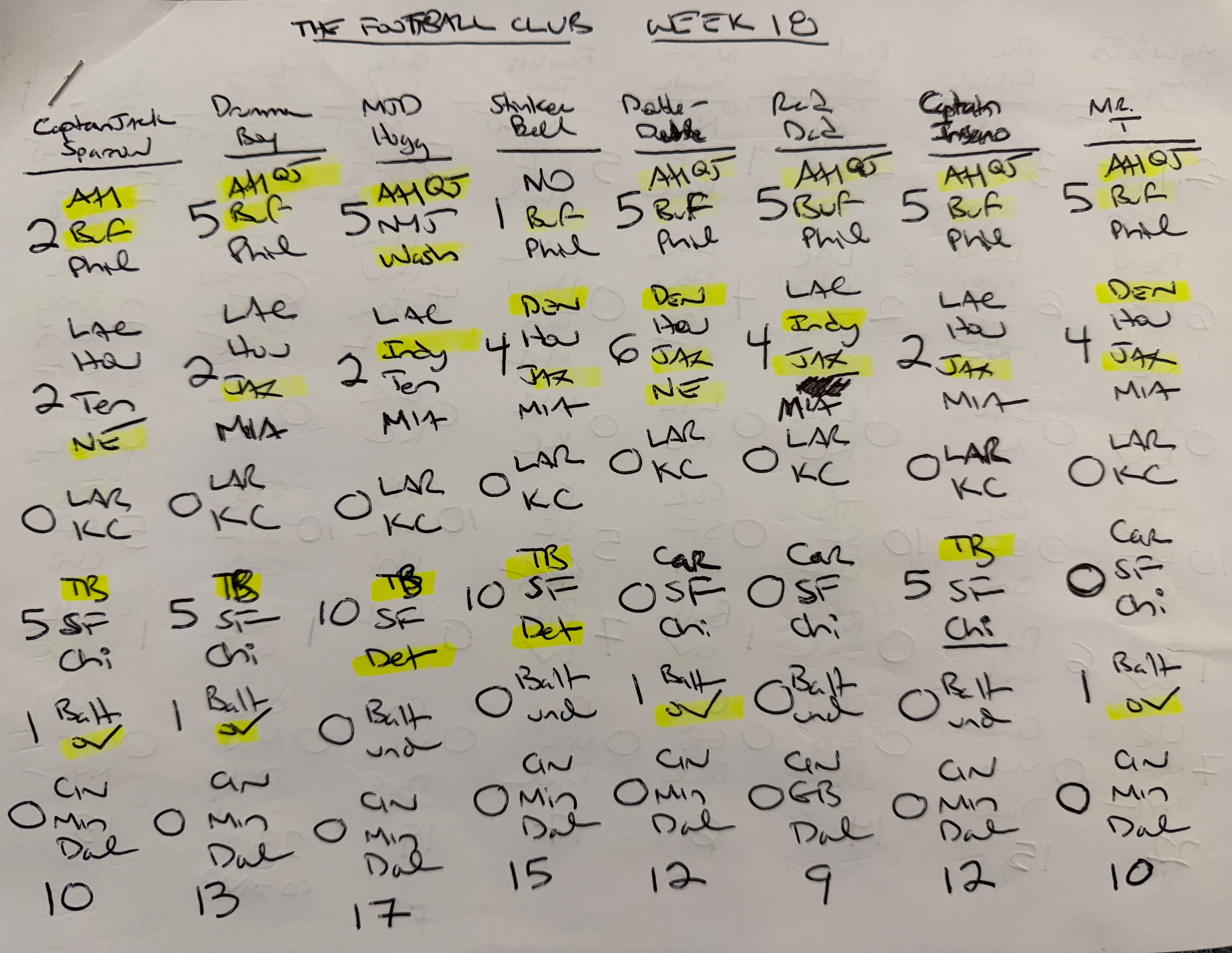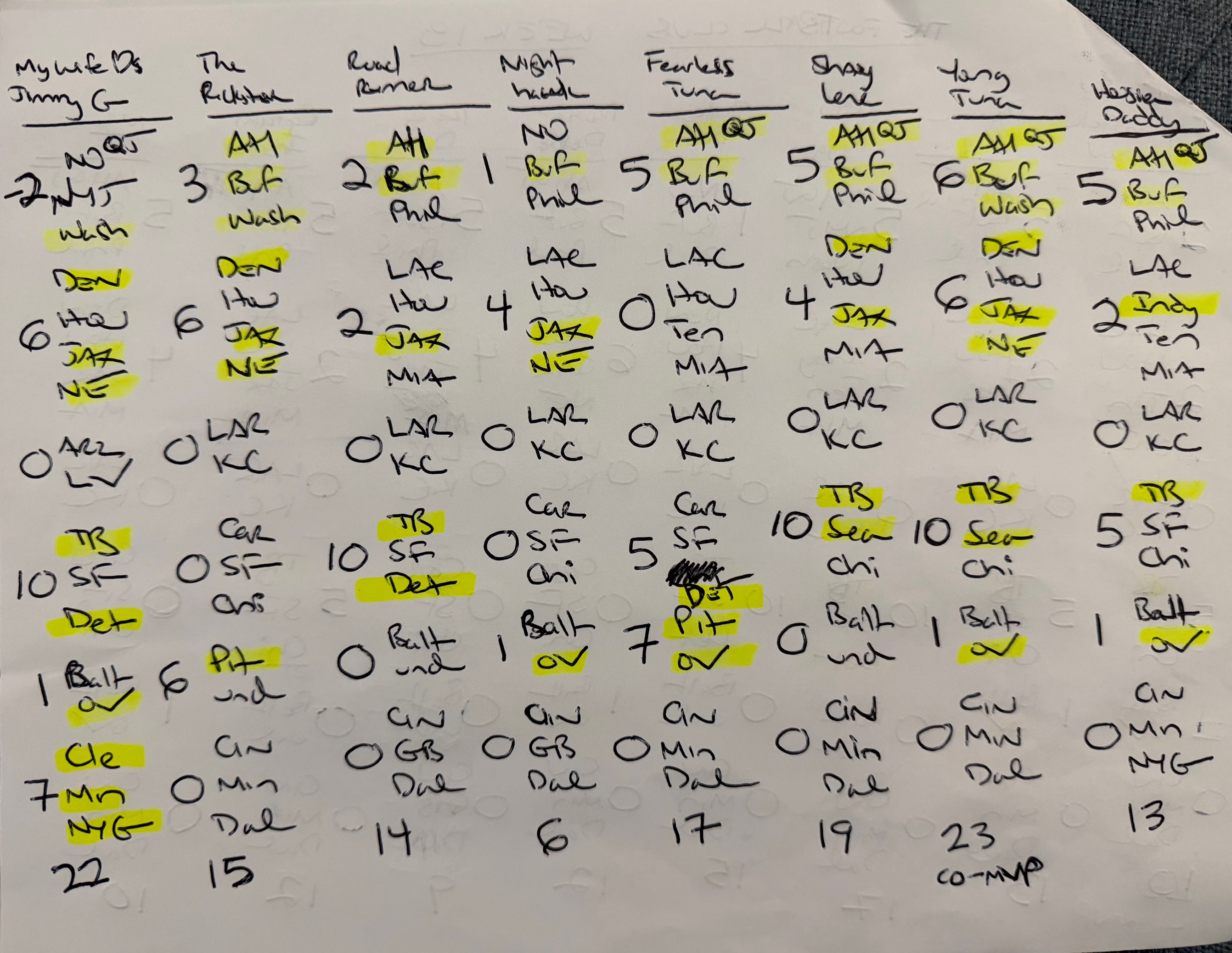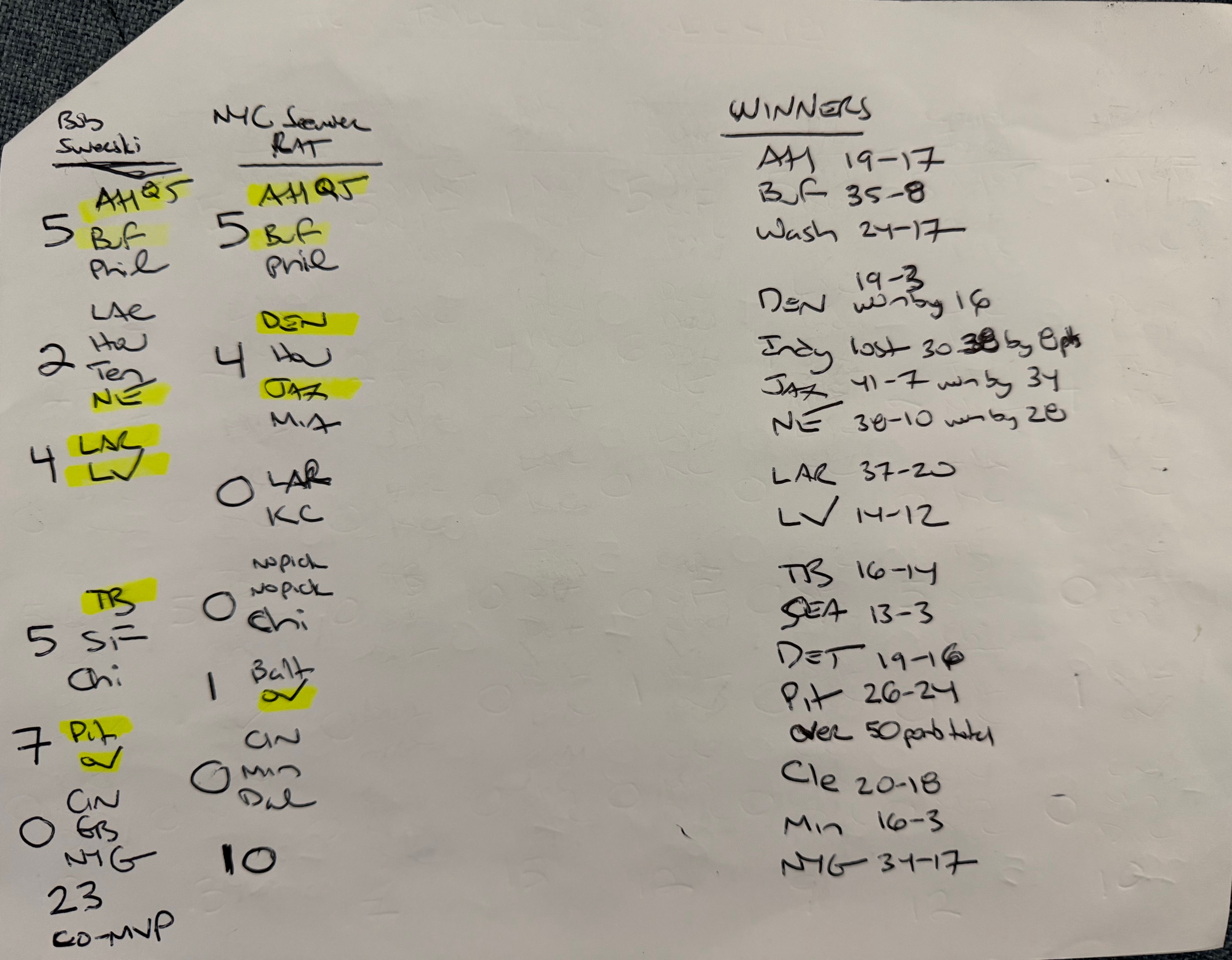
The Football Club – 2025 Year in Review

Opening Editorial
The Football Club has always been about more than standings, trophies, or point totals. It’s about endurance, judgment, and the quiet discipline required to show up every single week knowing that one careless Sunday can erase months of smart work. Over time, the format has revealed something deeper than who picks games well—it exposes who adapts, who panics, and who mistakes reputation for protection. The longer the season, the less random chance matters, and the more habits are exposed.
The 2025 season captured that reality better than most. The margins were razor-thin, momentum shifted constantly, and the Club Championship wasn’t decided until the final week—by a single point. Leads that once felt safe vanished in a matter of weeks. Players who dominated stretches of the season found themselves scrambling just to hold position. Others lurked quietly, waiting for the league to tighten before making their move. It was a season where patience mattered as much as boldness, and restraint often outperformed flash.
But 2025 didn’t unfold in a vacuum. When viewed alongside the previous four seasons, it becomes clear that this year was less about surprise and more about confirmation. Some legacies were reinforced. Some reputations finally cracked. A few players proved that past success still translates under pressure, while others learned that yesterday’s trophies don’t score today’s points. Patterns that once felt coincidental now look deliberate, and trends that could be dismissed as variance now feel unavoidable.
What follows is not a list of winners and losers, nor a celebration of isolated achievements. It is a season-long analysis—contextualized across five years—of how each member navigated the grind across Points, Head-to-Head, and Pro Bowl play. Some validated long-standing legacies. Some rewrote their narratives entirely. And some simply survived another year in one of the most unforgiving competitive environments the club has ever produced.
#1 MJD Hogg (Club Champion)
The 2025 Club Championship ultimately belongs to MJD Hogg, and it was earned the hard way. Four MVP awards, six weeks at #1, and a final total of 388 points made this one of the tightest championship seasons in club history, with the title decided by a single point in Week 18. What separates MJD Hogg from other contenders was timing—he controlled the early season, weathered the Captain Jack Sparrow surge, and still had enough left to close when it mattered. His Pro Bowl run with Daddy & His Boys ended one step short, but the points trophy is the crown jewel, and this season reinforced that MJD Hogg is built for endurance, not flash. Already a multi-time Pro Bowl winner, this title strengthens his case as one of the most complete players of the modern era. The next step is turning narrow escapes into separation—building a small midseason cushion so Week 18 doesn’t have to decide everything. Over the last five seasons, MJD Hogg’s rise has been deliberate rather than explosive, moving from mid-pack results into sustained contention before finally breaking through in 2025. Unlike short-term spikes, his trajectory shows learning and correction rather than volatility. Among current members, his arc most closely resembles a textbook championship build rather than a hot streak.
#2 Drummer Boy (Runner-Up)
Drummer Boy somehow managed to have both a heartbreaking and triumphant season at the same time. He finished one point shy of the Club Championship, yet walked away with the Super Bowl XXIII title after cutting through Roadrunner, Double-Double, Fearless Tuna, and Young Tuna in a ruthless postseason run. His 21 Games of the Week correct underscored a willingness to live in the danger zone, and it paid off repeatedly. If this season proved anything, it’s that Drummer Boy may not always win the long race—but when brackets tighten and pressure spikes, few players are more dangerous. With multiple Club titles, a Super Bowl championship, and a deep Pro Bowl résumé, his name is now inseparable from high-stakes success. Converting a few of those explosive weekly ceilings into steadier early-season points would make a Club Championship almost unavoidable. Drummer Boy has been the most consistently elite performer of the five-year window, finishing no worse than seventh and winning multiple major titles. The only blemish is that two of his strongest seasons ended just shy of the Club Championship. Over time, his arc reads less like inconsistency and more like unfinished dominance.
#3 Captain Jack Sparrow
No player defined the middle of the season more than Captain Jack Sparrow. Nine weeks at #1, four MVPs, the best week of the season (37 points), and a comeback from 13th place last year made this one of the most impressive non-championship seasons the club has seen. The uncomfortable truth is that despite controlling the standings for over half the year, he didn’t finish the job. Still, a Pro Bowl championship with the Gridiron Guardians and a Division title in Head-to-Head softened the blow. This was a reminder that dominance doesn’t guarantee a trophy—but it does restore reputation. Already a former Club Champion and Super Bowl winner, this season reestablished him as a weekly force rather than a streaky threat. The challenge now is sustaining peak form late—protecting a lead matters just as much as building one. Captain Jack Sparrow’s five-year profile is defined by sharp peaks and sudden drops, including a championship-caliber 2023, a collapse in 2024, and a near-miss in 2025. The talent is unquestioned, but the volatility remains unresolved. His arc suggests a player still wrestling with sustainability more than capability.
#4 Stinkerbell
Stinkerbell quietly authored one of the most efficient seasons in the league. Fourth place overall, elite Triple Jeopardy accuracy, and a steady presence near the top without ever truly collapsing. She didn’t win MVPs in bunches, but she was almost always there when others stumbled. Her early Super Bowl exit masked how solid her points season actually was. In a year defined by chaos at the top, Stinkerbell was the definition of controlled consistency. Coming off a record-setting Club Championship in 2024, this follow-up proved her dominance wasn’t a one-year anomaly. Adding one or two more high-risk, high-reward weeks could push consistency into true title contention. Stinkerbell’s historic 2024 season now stands clearly as an apex moment within a broader pattern of high competence rather than constant dominance. Across five years, she has rarely collapsed but has only once separated decisively from the field. Her arc reflects control and precision more than repeated intimidation.
#5 Double-Double
Another year, another Top Five finish—and another reminder that Double-Double might be the most reliable asset in the club. Fifth place overall, elite Triple Jeopardy efficiency, and a Super Bowl run that ended only because of seeding rather than performance. The Pro Bowl flameout with Wild Animals was jarring, but in Points play, Double-Double continues to be the measuring stick for consistency. Eight straight Top Five finishes now feel less like a streak and more like an expectation. With multiple Club titles and a record-setting Pro Bowl résumé, his floor remains unmatched. Translating regular-season reliability into deeper Pro Bowl and Super Bowl finishes is the final piece missing from an already elite profile. Double-Double’s five-year résumé may be the most stable in the club, with no season outside the Top Five. However, the same consistency that once defined excellence has slowly become expected rather than feared. His arc suggests reliability bordering on predictability, which is both his strength and his limitation.
#6 Captain Insano
Captain Insano’s season doesn’t jump off the page, but a sixth-place finish and a peak of #2 show a player who was competitive all year without fully breaking through. His Super Bowl exit came early, and his Pro Bowl run with the Hulkamaniacs had a ceiling, but the points were there. This was a season of relevance without payoff—good enough to matter, not sharp enough to threaten. A former Pro Bowl champion, he continues to hover just below the elite tier. Sharper execution in Triple Crown and Jeopardy categories could turn relevance into real pressure on the Top Five. Captain Insano has hovered in the same competitive band for five seasons, rarely collapsing and rarely breaking through. His results point to a player who belongs in the conversation but not at the center of it. Over time, the lack of upward movement has become the story.
#7 Rad Dad
Rad Dad’s season didn’t start loudly, but December belonged to him. Player of the Month honors, a Pro Bowl championship with the Gridiron Guardians, and a steady late climb pushed him into seventh place overall. He didn’t dominate weeks, but he avoided disasters, which is often more valuable. This felt like a veteran season built on restraint rather than risk. Already a former Club Champion and Super Bowl winner, this Pro Bowl title adds another layer to his résumé. Bringing December-level confidence into September would make him a full-season threat rather than a late riser. Rad Dad’s 2022 championship now marks the clear high point of his five-year run. Since then, his results show a gradual slide from dominance into competence, mitigated by strong team performances. His arc suggests a former alpha transitioning into a high-value veteran role.
#8 My Wife Loves Jimmy G
Few players had a stranger arc than My Wife Loves Jimmy G. September belonged to him, including an early stint at #1 and the most Triple Crowns of anyone all year. Then came the fade. His eighth-place finish doesn’t reflect how dangerous he looked early, but the Sportsmanship Award capped a season defined as much by character as performance. The tools are there—what’s missing is sustained execution. A Super Bowl champion and Pro Bowl champion, his ceiling remains unquestioned. Sustaining early-season aggression deeper into the year would prevent fades that mask legitimate championship tools. MWLJG’s five-year window shows repeated proximity to greatness without sustained capture of it. Runner-up finishes and category excellence contrast sharply with late-season fades. His arc is one of unrealized potential rather than decline.
#9 Mr. T
Mr. T lived on the edge all season, finishing ninth with a mix of strong weeks and sudden drop-offs. His MVP in Week 17 showed he can still swing a week when things align, and the Pro Bowl title with the Gridiron Guardians added real value to his year. The question remains consistency—because when he’s on, he’s still a problem. With multiple Pro Bowl championships to his name, his team value continues to outweigh his point totals. Reducing volatility—especially avoiding low-floor weeks—would dramatically improve his Points standing without changing style. Mr. T’s five-year trajectory shows a slow recovery from a deep dip rather than a steady climb toward contention. Team success has masked individual volatility, but the points results remain stubbornly inconsistent. His arc suggests survival and contribution, not resurgence.
#10 Fearless Tuna
Fearless Tuna’s tenth-place finish feels underwhelming until you look closer. Two MVPs, a Division title in Head-to-Head, and a Super Bowl run that ended in a one-score loss paint a picture of a player who was better than his final rank suggests. The Pro Bowl run with Tuna Generations showed volatility, but this was not a lost season—just an incomplete one. A former Club Champion and Pro Bowl winner, his legacy already speaks louder than one middling finish. Turning strong tournament instincts into weekly points accumulation is the clearest path back to the top tier. Fearless Tuna’s arc over five seasons shows a clear shift from dominance to relevance. After bottoming out in 2022, he rebounded into respectability but never reclaimed elite form. The trend suggests stabilization after decline, not a return to the summit.
#11 The Rickster
By Rickster standards, this was a quiet year. Eleventh place, no awards, and an early Pro Bowl exit feel odd for one of the most decorated players in club history. Still, his numbers were solid, and his presence continues to elevate teammates more than standings reflect. Sometimes the dynasty year is simply about survival. As the only four-time Super Bowl champion and a multiple-time Club and Pro Bowl winner, his résumé remains untouchable. Reasserting weekly urgency in Points play would ensure legacy seasons don’t quietly drift into the middle. The Rickster’s last five seasons tell a quiet but undeniable story: sustained participation without sustained contention. While his historical résumé remains unmatched, his modern arc reflects a gradual disengagement from title races. Legacy now outweighs present impact.
#12 Roadrunner
Roadrunner may have finished 12th in Points, but his season will be remembered for what happened in Head-to-Head. A #1 seed, dominant wins, and a Super Bowl Runner-Up finish confirmed his ability to peak in elimination formats. The points weren’t there consistently, but when the bracket tightened, Roadrunner was exactly who nobody wanted to face. A longtime contender, his postseason instincts remain elite. Smoothing out regular-season scoring would give his dangerous postseason form more opportunities to matter. Roadrunner’s five-year arc is the most split in the league: declining regular-season results paired with persistent postseason danger. Early success gave way to inconsistency, but elimination formats continue to expose lingering strengths. His arc reflects residual excellence rather than current dominance.
#13 Shaylene
Shaylene’s 13th-place finish undersells her contributions elsewhere. She tied for the most Sunday Night wins and was part of multiple high-scoring Pro Bowl weeks. The standings weren’t kind, but the week-to-week competitiveness was real. This was a season that mattered more to her teams than to her rank. A Super Bowl finalist and Pro Bowl contributor, her impact often shows up beyond the standings. Converting strong Sunday Night instincts into better midweek category execution would lift her out of the lower half. Across five seasons, Shaylene’s results have remained tightly clustered in the lower middle of the standings. Flashes of category excellence never translated into full-season momentum. Her arc suggests a stable floor with an elusive ceiling.
#14 Nighthawk
Nighthawk’s year was split cleanly in two. In Points, he struggled to maintain traction, finishing 14th. In Head-to-Head, he was a Division Champion and Conference Finalist. The contrast was stark. This season reinforced that Nighthawk remains one of the toughest weekly matchups—even if the long game still needs work. A former Club and Pro Bowl champion, his ceiling is still evident. Improving long-range consistency would align his Head-to-Head dominance with stronger Points results. Nighthawk’s five-year window shows a gradual erosion in Points play despite continued Head-to-Head competitiveness. Early promise flattened into stagnation. The arc suggests that format-specific strengths are no longer enough to offset weekly inconsistency.
#15 Young Tuna
Young Tuna’s late surge saved his season. Three MVPs, a November Player of the Month award, and a massive Week 18 score vaulted him out of the bottom tier. His Super Bowl loss to Drummer Boy was decisive, but the trajectory is unmistakable. This was the year he stopped being potential and started becoming a problem. Already a Club Champion runner-up and Pro Bowl champion, his future feels inevitable. Starting fast instead of surging late could turn momentum into a season-long presence. Young Tuna’s five-year arc is defined by extremes: early success, a sharp drop, and a slow rebuild. The late-season surges of recent years show growth, but the volatility remains. His trajectory is upward, but still incomplete.
#16 Hoosier Daddy
Hoosier Daddy’s season never quite got off the ground. Sixteenth place, limited ceiling weeks, and an early Super Bowl exit made this a frustrating year. Still, his Pro Bowl runner-up finish with Daddy & His Boys showed he remains a valuable team piece. Even off years don’t erase a résumé like his. As a multiple-time Club Champion and Pro Bowl legend, his floor is still respected. Trusting aggressive picks earlier in the season would prevent slow starts that are hard to recover from. Hoosier Daddy’s five-year trend shows one of the steepest declines in the league. Once a perennial contender, his recent finishes reflect difficulty adapting to the modern competitive environment. His arc now reads as legacy under pressure.
#17 Bob Swerski
Bob Swerski finished 17th, but his late-season scoring burst and two MVP awards kept him relevant longer than expected. His Super Bowl loss came early, but his ability to spike weeks remains intact. This was a season of flashes rather than flow. A three-time Super Bowl champion, he remains one of the club’s most dangerous wild cards. Channeling late-season confidence earlier could turn flashes into sustained relevance. Bob Swerski’s five-year arc is the definition of variance, with podium finishes followed by basement seasons. The peaks remain impressive, but they are increasingly isolated. His trajectory suggests volatility has overtaken reliability.
#18 New York City Sewer Rat
The standings weren’t kind to NYC Sewer Rat, who finished last in Points. Still, his willingness to stay aggressive—especially in Sunday Night games—kept him involved. The results weren’t there, but the effort never disappeared. In a league that values commitment, that still matters. Every long-running club needs grinders, and he remains one of them. Refining risk selection—choosing when to swing rather than swinging often—would raise his floor significantly. NYC Sewer Rat’s five-year arc is brutally consistent: high effort, low return. Aggression never disappeared, but refinement never arrived. Over time, the gap between intention and outcome widened rather than closed.
Closing Editorial
The 2025 season reminded everyone why The Football Club endures. No champion coasted. No contender was safe. And no trophy came without consequence. A one-point title race, a mid-seed Super Bowl champion, and a Pro Bowl upset all reinforced the same lesson: reputation may open doors, but execution decides outcomes. In a format this long and this demanding, shortcuts don’t exist. Every week leaves a mark.
What makes this season linger is not just how close it was, but what it revealed. Over five years, careers have bent in clear directions. Some players learned how to win without dominating. Others learned that dominating without closing is its own kind of failure. A few found ways to reinvent themselves after collapse, while others slowly slipped without a single dramatic moment to point to. Decline, in this league, is rarely loud.
As the club turns toward another season, the records will reset, the picks will start fresh, and everyone will technically begin at zero. But no one truly starts clean. History follows every pick. Confidence earned over years can still evaporate in a month. Momentum can be built slowly—or lost instantly. The league is tighter now, less forgiving, and increasingly shaped by players who understand that consistency is not passive—it’s aggressive in its own way.
That is why seasons like 2025 matter. They don’t just crown champions; they clarify trajectories. They force honest reflection and remove comfortable illusions. And they remind everyone involved that surviving this format year after year is an achievement in itself—but contending still requires evolution. In The Football Club, the past never disappears. It waits patiently, measuring whether the future is earned or borrowed.